
Discounted Shipping
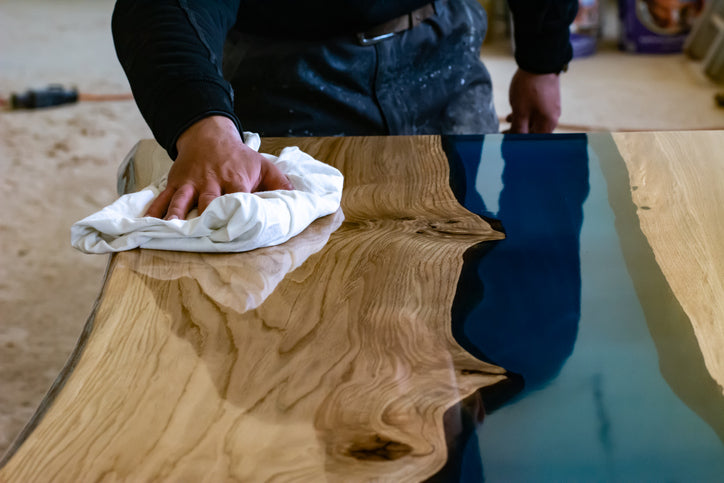
After hours of hard work measuring, cutting, and assembling your project, it's a guarantee that you'll want to end strong with a glossy and professional finish!
A beautifully crafted piece deserves a finish that enhances the wood's natural beauty, adds durability, and gives it that professional-looking sparkle.
Whether you're building a dining table, cabinetry, or a keepsake box, mastering wood finishing is a crucial skill that separates amateur builds from showroom-quality pieces.

At KJP Select Hardwoods, we know how much effort goes into every cut, joint, and sanding pass. That's why finishing should be given as much care and attention as any other process step.
Let's walk through some expert tips and techniques to help you achieve that flawless, professional look for all your woodworking projects:
Proper preparation is key before you consider stains or topcoats. Start by sanding your piece thoroughly, moving through grits progressively—typically 80, 120, then 180 or 220 grit, depending on the wood type.
Move on to the next grit of sandpaper only once the surface of your project looks uniform without any noticeable scratches or dents. Avoid skipping grits or using dull sandpaper.

It can be tempting to rush through this part, but uneven or inadequate sanding will become painfully obvious once the finish is applied. Sanding is often the longest step in the finishing process, so take your time and be as meticulous as possible.
Pro tip: Always sand with the grain to avoid scratches that show up after finishing.
Not all finishes are created equal, and each has advantages depending on your project type and the desired finished look. The market of wood finishes is vast and confusing at times, but we're here to help break things down a little.
Honorable Mention: Wax Finishes. At KJP Select Hardwoods, customers often create bowls, utensils, or cutting boards for regular use. We recommend using Honey Bees All-Natural Wood Cream to ensure a long-lasting, all-natural, food-safe finish. This finish comprises locally sourced beeswax that seals and protects wood with a gorgeous natural shine.

If you're unsure which product is right, visit our showroom or consult our team via phone or email—we're always happy to guide you through your options based on your project's needs. Some of our favourite recommended brands include Rubio Monocoat, Osmo, and Livos finishing oils.
Different woods react to finishes in various ways. Maple, for instance, can blotch under certain stains, while walnut tends to absorb oils beautifully. Always test your chosen finish on a scrap piece or an inconspicuous area. Always research and understand the unique qualities of the wood species you've decided to work with.

At KJP Select Hardwoods, we carry various wood samples and finishes in-store and online. We strongly recommend experimenting before applying a finish to the entire surface.
This step can save you from costly mistakes and help you discover the exact look you're aiming for.
If you're interested in using our Rubio Monocoat finishing oil, in that case, we sell small, 6mL packs of the finish so you can purchase different colours to test before picking the final finish for your project.
Once you've chosen your finish, the next critical step is the application technique. Use high-quality brushes, lint-free cloths, or sprayers to apply the finish evenly.
Follow the manufacturer's instructions closely—some finishes must be wiped off after a set time, while others should be built up in multiple coats. It's also important to apply your finish in a place that is as dust-free as possible.
You should use a solvent (such as Rubio Monocoat Wood Cleaner or Wood Prep) to clean the wood before finishing to ensure there's no dust left behind after the sanding process. Any dust left behind or floating in the air may affect your finished product's overall look and shine.

When applying your finish of choice to your clean, sanded wood, thin, even layers are always better than one thick coat. Allow each layer to dry thoroughly before lightly sanding between coats with fine-grit sandpaper (320–400 grit).
This helps the next layer bond properly and eliminates dust nibs or imperfections. As always, read and follow the manufacturer's instructions carefully, as some finishes are designed only for use in a single coat.
After your last coat has dried and cured (which can take a few days, depending on the product), you may be tempted to call it done—but don't!
A final rubdown with ultra-fine steel wool or abrasive pads, followed by a coat of paste wax or a polishing compound, can add depth, smoothness, and a soft sheen that gives your piece a refined, professional appearance.

Many woodworkers who shop at KJP Select Hardwoods tell us this is the most satisfying part of the finishing process. It's where all your hard work pays off, and your project comes to life.
The job doesn't end once the finish dries. Wood is a living material; even the most durable finishes need some care over time. Use coasters, avoid harsh cleaning agents, and dust regularly with a microfiber cloth.
Periodically reapplying wax or polish can also help maintain the lustre and protect the surface from wear. Products like Rubio Monocoat Surface Care or Maintenance Oil can help keep your creation as polished as the day it was finished.
Like any woodworking skill, mastering finishes takes time, experimentation, and trial and error. Don't be discouraged by early mistakes—they're part of the learning curve.
We encourage everyone to practice finishing on smaller pieces or test boards before applying their skills to final projects.

You'll quickly develop an eye for how finishes behave and build the confidence to try more advanced techniques, like French polishing or glazing.
A beautifully applied finish is the ultimate reward for your hard work—it enhances the wood's natural character, offers protection, and elevates your craftsmanship professionally.
Please stop by our showroom or explore our online shop for top-tier finishing products, accessories, and guidance. With the right techniques and patience, you'll turn out pieces that look and feel truly professional.